If you have been shopping for a new laptop, smartphone, tablet, gaming console, or even a TV recently, you have probably noticed one clear trend: electronics are becoming significantly more expensive.
Devices that carried a specific price tag just a year ago now feature noticeably higher figures. In certain cases, this shift was gradual. In others, prices appeared to jump almost overnight.
Naturally, many consumers are asking the same core questions:
Why are electronics getting more expensive?
Why has my favourite laptop suddenly gone up in price?
Why are brands like Apple, Samsung, and Microsoft increasing prices?
The answer isn't simply standard inflation.
Behind the scenes, the global technology sector has been dealing with one of the most significant supply-chain challenges in recent history. Memory chip shortages, growing demand from artificial intelligence (AI) infrastructure, rising raw material costs, and increasing manufacturing expenses have combined to create a perfect storm for electronics pricing.
Rather than affecting a single brand, these challenges have impacted manufacturers across the entire industry. From premium companies like Apple to Android smartphone makers, gaming console manufacturers, and laptop brands, businesses have all been forced to adapt.
Some absorbed the costs for months before increasing prices.
Others introduced smaller increases over several stages.
Either way, the result has been the same: consumers are paying more for technology than they were only a short time ago.
The good news is that understanding why these price increases are happening can help you make smarter buying decisions. It can also help you identify opportunities to save money without sacrificing quality.
In this guide, we will break down what is driving today's electronics prices, how major brands have responded, what the future may look like, and how savvy shoppers in New Zealand can still find excellent value when buying tech.
Why Have Electronics Prices Increased?
While inflation often gets the blame, the reality is far more complex.
The recent rise in electronics prices is the result of several global factors happening at the same time. Individually, each one would have put pressure on manufacturers. Together, they have created one of the most challenging periods the technology industry has faced in years.
Let's take a closer look at the biggest reasons.
The AI Boom Has Changed the Semiconductor Industry
Artificial intelligence has transformed the way semiconductor manufacturers allocate production capacity.
As demand for AI models, cloud computing, and large data centres exploded, companies producing memory chips shifted much of their manufacturing towards High-Bandwidth Memory (HBM) and advanced AI-focused components.
These specialised chips are essential for powering AI servers and high-performance graphics processors used by companies developing next-generation artificial intelligence.
While this investment has accelerated AI innovation, it has also reduced the production capacity available for the memory chips found in everyday consumer electronics.
That means products like laptops, smartphones, tablets, gaming consoles, and desktop computers are now competing for a smaller supply of traditional memory components.
When supply tightens and demand remains strong, prices inevitably rise.
Memory Chip Prices Have Increased Dramatically
Memory is one of the most important components inside almost every modern electronic device.
Whether you are buying:
- 💻 A MacBook
- 💻 A Windows laptop
- 📱 An iPhone
- 📱 An Android smartphone
- 📲 An iPad or Tablet
- 🎮 An Xbox or PlayStation Console
- 🖥️ A Desktop Computer
Memory chips play a critical role in both hardware performance and total production cost.
Over recent months, contract prices for DRAM and NAND flash memory have risen sharply as manufacturers prioritised AI-related production.
These increases have significantly affected the overall cost of producing consumer electronics, leaving many brands with little choice but to pass at least some of those costs on to customers.
Rising Raw Material Costs
It is not just semiconductors that have become more expensive.
Many of the key raw materials used to manufacture electronics have also experienced price increases, including:
Copper, for example, is widely used in wiring, printed circuit boards, cooling systems, and power delivery.
As commodity prices increase, manufacturing costs rise alongside them.
When combined with higher shipping expenses and ongoing supply-chain pressures, the total cost of producing electronics continues to climb.
Manufacturers Can Only Absorb So Much
Large technology companies often negotiate long-term supply contracts, allowing them to shield consumers from sudden price increases for a period of time.
However, those agreements do not last forever.
Once contracts expire and manufacturers begin purchasing components at today's higher market prices, retail prices eventually have to adjust.
That is why many brands did not increase prices immediately. Instead, they delayed changes for months before introducing larger adjustments when existing supply agreements came to an end.
This staggered approach explains why many consumers experienced several waves of price increases rather than one sudden jump across every product category.
It Is Affecting the Entire Technology Industry
Perhaps the most important factor to understand is that these price increases are not limited to a single brand.
Whether you are considering an Apple MacBook, a Samsung Galaxy smartphone, an Xbox console, or a Windows laptop, nearly every major manufacturer has faced the same underlying challenges.
Each company has responded differently, but the factors driving higher prices are largely shared across the industry.
That is why electronics have become more expensive across multiple categories rather than within just one product line.
What's Next?
Electronics prices did not increase overnight, and they will not necessarily return to previous levels overnight either.
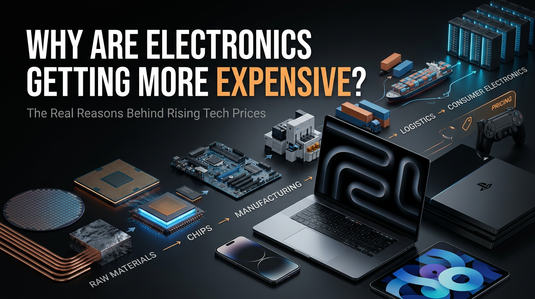
To understand how we reached this point, it is helpful to look at the three major waves of price increases that unfolded across the technology industry and how they gradually made their way from semiconductor manufacturers to the products consumers buy every day.
The Three Waves of Electronics Price Increases
The current rise in electronics prices hasn't happened as one massive industry-wide adjustment.
Instead, manufacturers and retailers have experienced several distinct rounds of higher component costs. Those expenses gradually moved through the global supply chain before finally reaching retail shelves.
While the exact timing and magnitude of each price adjustment varies by brand, product category, and regional market, the overall pattern remains consistent: component costs escalate first, manufacturers absorb as much as they can, and retail price tags eventually reflect the difference.
How the Pricing Pressure Escalated
Component Production Costs Begin Rising
Higher Expenses Filter to Finished Consumer Electronics
Storage and Memory Constraints Drive Broader Retail Hikes
First Wave: Component Costs Begin Rising
The initial pressure surfaced at the foundational component level.
Semiconductor plants and component suppliers started facing intense demand for memory and silicon modules as enterprise AI infrastructure expanded rapidly. At the same time, silicon foundries had to split their finite manufacturing capacity between standard consumer memory and the significantly more lucrative AI server hardware.
This created a complex bottleneck for hardware brands across the board:
- 💻 Standard laptops require steady supplies of DDR5 DRAM.
- 📱 Next-gen smartphones depend on high-density LPDDR memory chips.
- 🎮 Gaming consoles rely on ultra-fast unified memory and high-capacity SSD storage.
Meanwhile, data centre operators were placing massive orders for premium memory products for AI model training. The direct outcome was constrained allocation and higher contract rates for basic consumer components.
For buyers, this initial phase wasn't immediately obvious on store shelves. A computer manufacturer could maintain existing pricing as long as it held existing warehouse stock or active long-term purchase agreements. However, the fundamental manufacturing cost for the next production run was already shifting upward.
Second Wave: Higher Costs Reach Consumer Electronics
The second phase took hold when elevated component prices began filtering into finished retail units.
This is where shoppers began observing clear retail adjustments. While tech companies absorbed early cost increases for several quarters, no commercial operation can absorb compounding cost increases permanently.
Eventually, sustained higher costs for system memory, storage drives, processors, display assemblies, raw materials, and global freight had to be factored into final product MSRPs. This explains why retail price hikes frequently appear several months after an initial component supply shortage begins.
Furthermore, different brands operate on different timelines. A manufacturer with substantial component reserves can maintain legacy prices longer than a competitor forced to source components on the spot market immediately. This leads to staggered price adjustments across competing brands and device categories.
🍎 Case Study: Apple Pricing Adjustments
Apple offers one of the most visible modern examples of this dynamic. During 2026, Apple adjusted pricing on several MacBook and iPad models globally. Reports linked these increases directly to climbing memory and storage costs within the supply chain.
Because Apple possesses immense purchasing scale and long-standing supplier commitments, these price adjustments illustrate that even the world's largest tech companies cannot completely insulate retail prices from systemic component cost shifts.
The lesson for everyday shoppers is clear: when component input costs remain high for an extended period, even major market leaders eventually adjust their pricing structures.
Third Wave: Storage and Memory Become an Even Bigger Factor
Pressure on component prices did not subside after the first wave of adjustments. Demand for RAM and high-speed flash storage continued to rise across AI infrastructure, server farms, mobile devices, and personal computers.
Major chip suppliers like Samsung have reported sustained enterprise demand for advanced memory modules, keeping industry-wide inventories of DRAM and NAND flash relatively tight.
Gaming hardware provides another clear example of this impact. When console manufacturers updated pricing structures worldwide, adjustments were linked directly to memory and storage manufacturing costs that had increased significantly compared to earlier production runs.
These adjustments highlight how deep supply-chain inflation eventually becomes visible directly on consumer price tags.
Why Don't All Brands Increase Prices at the Same Time?
This dynamic creates interesting variation in the market. You might see one manufacturer raise prices on its laptop lineup while another keeps its pricing steady.
That difference doesn't mean one company avoided component inflation. It simply reflects variations in:
Large-scale manufacturers contract component purchases months or quarters in advance, providing buffer periods against rapid market spikes. Once those fixed-rate agreements conclude and new component batches must be bought at current market rates, retail prices adjust to match.
Why AI Is Making This Cycle Different
There is another key factor distinguishing this cycle from standard supply fluctuations.
This isn't a routine temporary shortage where factories simply ramp up production of identical parts. The AI expansion has fundamentally altered the types of memory products the tech industry prioritizes.
AI data centers require massive quantities of High-Bandwidth Memory (HBM) and specialized storage modules. As a result, semiconductor producers have directed capital investments heavily toward advanced enterprise chip lines.
At the same time, demand for conventional DRAM memory and NAND flash storage hasn't decreased. Consumers still require reliable memory for everyday devices like laptops, iPhones, tablets, solid-state drives (SSDs), and consoles.
Chipmakers are essentially balancing two massive, high-demand sectors: enterprise AI infrastructure on one side, and consumer technology hardware on the other. This competitive dynamic is a main reason why memory pricing remains a central topic in consumer tech today.
Price Increases Aren't Limited to Premium Flagships
It is easy to assume that top-tier, expensive devices bear the brunt of component inflation because they pack the newest features.
In reality, budget and mid-range devices can be even more sensitive to raw component increases. Entry-level technology is designed around tighter production margins, meaning even modest component price increases represent a higher percentage of the device's baseline manufacturing cost.
When memory or storage costs climb, manufacturers selling value-focused devices cannot absorb that difference long-term. This is why component inflation impacts everything from baseline smartphones to flagship workstation laptops.
Which Electronics Are Most Affected?
Devices with high memory and storage demands are naturally most exposed to current component cost trends. These categories include:
Conversely, accessories or simpler smart devices with minimal onboard memory experience different pricing mechanics. Internal hardware composition, memory specs, and storage capacity directly influence how susceptible a device is to component inflation.
The Practical Takeaway for Kiwi Shoppers
Rising prices on brand-new hardware don't mean you have to overspend on your next upgrade. Higher new-device pricing simply makes certified refurbished, pre-owned, and previous-generation technology a much smarter alternative.
A recent-generation MacBook or a quality refurbished iPhone retains the fast performance, sleek design, and daily reliability you need without the steep price jump of brand-new releases.
Ask: "What is the best quality tech I can get for my target budget?"
How to Save Money When Electronics Prices Are Rising
Higher component costs do not automatically mean you need to spend more.
In fact, a period of rising electronics prices can be a great reason to rethink how you shop for technology.
Instead of automatically buying the newest model, look at the actual value you are getting for your money. That might mean choosing a previous-generation device, buying pre-owned technology, or simply avoiding specifications you do not actually need.
New Zealand shoppers already have plenty of reasons to compare prices carefully. Consumer NZ recommends comparing prices and checking whether advertised savings represent genuine value rather than relying on a discount label alone.
💡 Smart Shopping Strategies for Today's Tech Market
Here are some of the practical ways to keep your technology budget under control without compromising on quality or performance.
1. Consider Previous-Generation Devices
You do not always need the latest model.
A new generation may introduce a slightly faster processor, better camera, brighter display, or additional AI features. However, those minor improvements do not necessarily make the previous model unsuitable for everyday use.
Consider what you actually do with your device. If you mainly use a laptop for:
You may not benefit significantly from paying a massive premium for the newest processor generation.
The same principle applies to smartphones and tablets. A previous-generation iPhone, iPad, Galaxy device, or laptop can still provide years of smooth, reliable service. When new-device retail prices rise, this strategy becomes even more important.
2. Don't Automatically Buy More RAM or Storage
Specifications can make shopping confusing.
You might see one laptop with 16GB of RAM and another with 32GB and assume the second one is automatically better. It is certainly better for heavy workloads like high-resolution video editing or 3D rendering. It is not necessarily better value for everyday users.
If you are primarily browsing the web, working with documents, watching videos, attending meetings, and using cloud-based AI tools, you may not need an extreme hardware specification.
Likewise, paying steep extra costs for internal storage does not make sense if most of your files live in secure cloud storage or on external drives. The smarter approach is to buy specifications that match your actual daily workload.
3. Refurbished and Pre-Owned Tech Offers Better Value
This is where the current market becomes particularly compelling.
When brand-new devices become more expensive, quality pre-owned technology offers an effective way to access highly capable hardware without paying the inflated retail price of a brand-new model.
Apple itself maintains a certified refurbished programme in New Zealand, with refurbished products undergoing functional testing and carrying warranty coverage. The broader refurbished market is also growing rapidly across New Zealand, with consumers choosing refurbished phones and laptops as a smart way to reduce costs while keeping quality electronics in use for longer.
Of course, not every pre-owned device is created equal. That is why you should always consider:
A professionally inspected, graded device from an established NZ reseller is fundamentally different from buying an untested unit from a unknown private seller.
4. Look Beyond the Newest Apple Release
Apple products are a standout example of this buying approach.
You do not necessarily need the newest MacBook, iPhone, or iPad to enjoy a fluid, premium experience. Apple hardware is engineered for longevity and maintains software updates for years after launch.
That is why previous-generation MacBooks and iPads remain hugely popular when new releases see price jumps. You are not sacrificing everyday quality; you are simply directing your money where it counts most.
5. Focus on Total Value Over Sticker Price
An ultra-cheap laptop is not automatically a good deal. Likewise, a higher-priced laptop is not automatically overpriced.
The essential question is: How much reliable service am I getting for my money?
A slightly better quality device that lasts several additional years delivers far greater long-term value than a cheap unit that requires replacement after twelve months.
New Zealand Consumer Protection guidance similarly encourages buyers to evaluate long-term utility rather than focusing solely on upfront price. Spending intentionally always beats spending blindly.
6. Buying Pre-Owned Does Not Mean Buying Outdated
There is a common misconception that choosing pre-owned technology means settling for obsolete hardware.
Technology does not lose its utility simply because a newer model reaches the market. A laptop or tablet that was considered top-of-the-line two years ago remains exceptionally fast for office tasks, study, browsing, content consumption, and modern productivity apps today.
7. Compare Before You Decide
Rising price trends make thorough comparison shopping vital. Before making a purchase, compare:
- • Brand-new versus certified pre-owned options
- • Latest models versus previous-generation releases
- • Storage variants to match real storage needs
- • Included warranty terms, guarantees, and store drop-off support
A genuine deal isn't just about seeing a massive promotional discount tag; it is about selecting the exact right device for your needs at a price that makes sense.
Where Does TechCrazy Fit In?
This is where a specialized provider like TechCrazy offers a real alternative to traditional retail shopping. Instead of limiting your options exclusively to brand-new releases, you can compare multiple hardware generations, conditions, configurations, and price points under one roof online or at our Auckland stores in Mt Wellington, Manukau, or Massey.
Explore our curated selections:
The goal is not to suggest you should never buy new technology. Sometimes a brand-new device is the ideal choice. But when prices are rising industry-wide, having flexible choices gives you full control over your budget.
The Bigger Picture: Tech Prices May Keep Fluctuating
The ongoing memory market highlights an important principle: technology prices do not exist in a vacuum.
Retail prices depend on complex semiconductor foundry schedules, memory allocations, AI infrastructure spending, raw material supply, shipping costs, foreign exchange rates, and global consumer demand.
Because AI infrastructure continues to draw heavy semiconductor investment, buyers should not assume every price increase will quickly reverse. While component supplies will improve over time and manufacturing techniques will evolve, those shifts take time to filter down to store shelves.
Final Thoughts: Buy Smarter, Not Simply Newer
Rising electronics costs do not mean you have to pause your upgrades. They simply mean becoming a more strategic shopper. Look past marketing hype, compare specifications against your daily needs, consider certified pre-owned alternatives, and judge a device by the utility it delivers rather than the year on the box.
The Rise of Recommerce: Why Pre-Owned Tech Makes More Sense
When new electronics become more expensive, consumers do not necessarily stop buying technology. Instead, many start looking for better ways to buy it.
That is one reason the recommerce market has become increasingly important. Recommerce refers to the buying and selling of previously owned products. In technology, that includes pre-owned smartphones, refurbished laptops, tablets, MacBooks, gaming devices, and consumer electronics.
The Core Principle of Recommerce:
A device does not suddenly lose its value or performance because someone owned it before you. If the hardware still meets your operational needs, buying pre-owned provides access to capable technology at a much lower price while extending product life cycles.
What Is the Difference Between New, Pre-Owned, and Refurbished?
These terms are often used interchangeably, but they represent very different buying categories:
Has not previously been sold or used by a customer. You pay the maximum price for standard retail packaging, untouched condition, and full factory warranty coverage.
Has previously belonged to another owner. Condition can vary considerably, making transparent cosmetic grading, warranty coverage, and return terms crucial.
Has gone through functional inspection, testing, cleaning, and necessary component repairs before resale. Quality varies by provider, which is why retailer reputation matters.
Why Recommerce Is Becoming More Attractive
The economics are straightforward. Suppose a new laptop costs significantly more because memory chips and components are driving up retail prices. You do not need to accept that price tag.
You can instead look at a previous-generation business laptop or MacBook that already features the exact hardware specifications you require. The technology may be slightly older, but your daily computing needs remain unchanged.
If you require a laptop for web browsing, office applications, studying, streaming, video calls, accounting, or everyday cloud-based AI tools, a well-selected previous-generation device delivers an excellent experience at a fraction of the cost.
A Previous-Generation Device Doesn't Become Worse When Prices Rise
If a MacBook cost $1,500 two years ago and a newer iteration now costs considerably more, the older model did not become less capable. It maintains the same processor capability, memory bandwidth, display quality, and daily reliability.
In fact, its relative value improves when brand-new alternatives see price hikes. You are not purchasing outdated technology; you are purchasing hardware that has already absorbed its initial depreciation curve.
Why Buying Local Tech "Near Me" Delivers Real Confidence
When shoppers search for refurbished electronics near them, they are usually searching for peace of mind. They want clear answers to vital questions:
Across Auckland and New Zealand, specialized electronics providers operate dedicated testing facilities to restore pre-owned hardware locally. This shift reflects growing consumer confidence in choosing quality pre-owned tech from established local businesses rather than taking risks with private online market listings.
What to Check Before Buying Refurbished Electronics
Never select a seller based on the lowest price tag alone. Verify that the business uses strict preparation standards:
1. Comprehensive Testing Process
A reputable reseller tests display health, battery condition, cameras, speakers, charging ports, Wi-Fi, Bluetooth, cellular connectivity, keyboard response, and system storage before selling.
2. Transparent Condition Grading
Condition definitions should be clear so you know whether a unit looks practically pristine or displays minor cosmetic wear from previous use.
3. Real Local Warranty Protection
Ensure your purchase includes robust warranty coverage, straightforward returns, and easy local support if repair assistance is ever needed.
Reducing E-Waste Through Extended Hardware Use
Alongside the clear economic benefits, recommerce plays an important role in reducing electronic waste. Every time a functional smartphone, laptop, or tablet is kept active, its productive lifecycle is extended.
How TechCrazy Fits Into the Recommerce Landscape
TechCrazy bridges the gap between high-priced new retail tech and risky private market sales. At our Auckland retail locations in Mt Wellington, Manukau, and Massey, you can inspect, test, and compare devices in person with complete confidence.
Browse our popular pre-owned categories online or in-store:
Whether you need expert guidance on hardware specifications or local warranty back-up, TechCrazy provides transparent pricing, full testing accountability, and dependable after-sales service.
The Smartest Way to Shop Technology Today
Rising component prices do not mean sacrificing quality. Before purchasing your next device, evaluate:
- ✔️ Brand-new pricing versus tested pre-owned value
- ✔️ Latest generation releases versus previous-generation models
- ✔️ Maximum potential specifications versus your actual daily workload
- ✔️ Unknown online marketplace sellers versus local store accountability
As the electronics market continues to navigate global supply factors and rising manufacturing costs, recommerce is no longer just a budget alternative; it is becoming the smartest way to buy technology.